High blood pressure
Accurate measurements and a simple record help you follow blood pressure and act when needed.
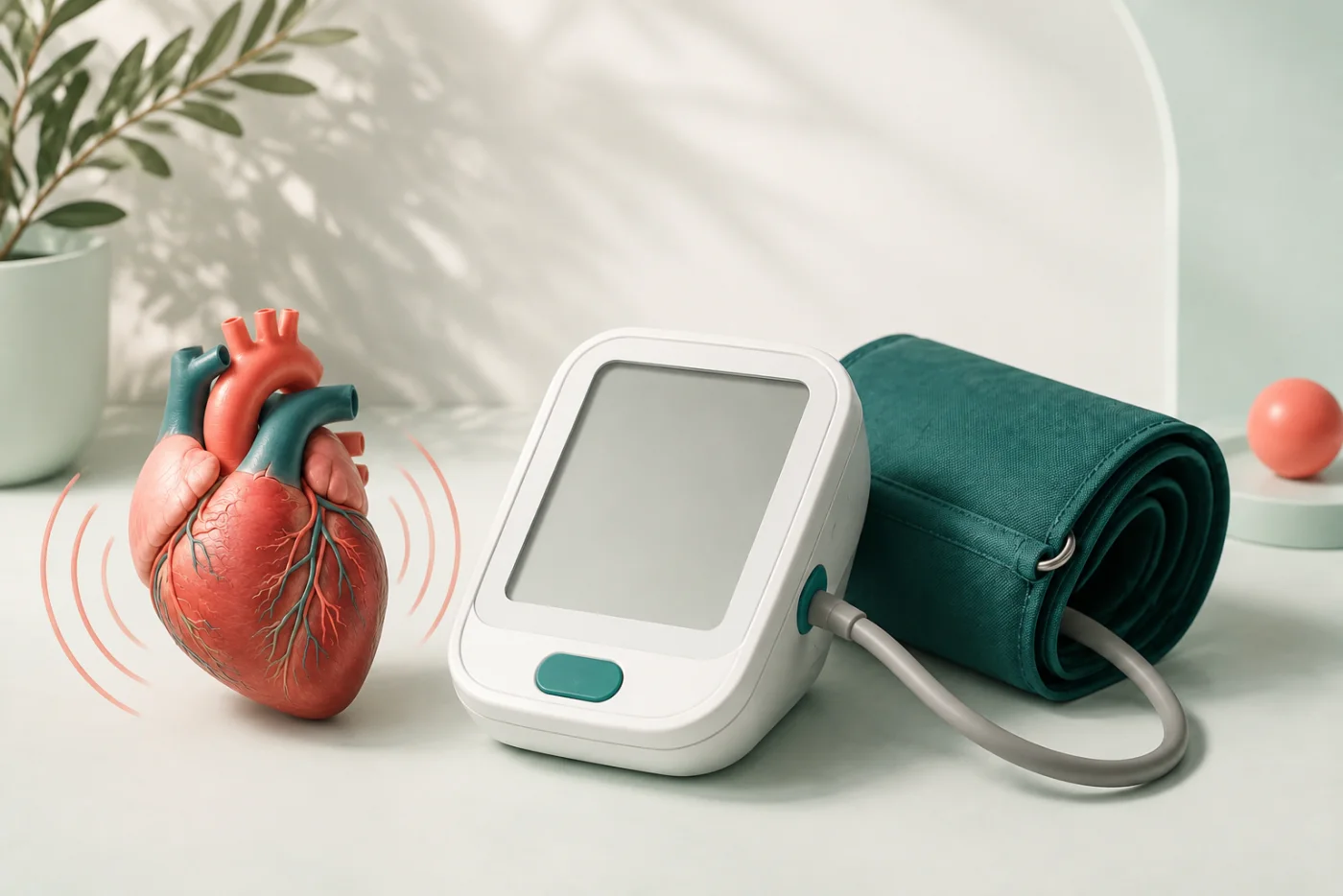
What do the numbers mean?
Blood pressure can rise without symptoms. Understanding readings starts with accurate measurement.
Example only. Diagnosis uses repeated readings; your target is personal.
Your clinician interprets repeated readings with your health history and agrees a target. Clinic and home thresholds can differ. A severely high reading needs prompt attention.
Where would you like to start?
Understanding high blood pressure
Blood pressure can rise without symptoms. Understanding readings starts with accurate measurement.
Home measurement and daily care
Use a validated upper-arm monitor with a cuff that fits.
When to arrange review or emergency help
Symptoms and the severity of the reading guide what to do now.
Is one high reading enough to diagnose hypertension?
Choose an answer to see the explanation.
Let's make it clearer.
Can I stop medicine when my pressure becomes normal?
Do not stop it on your own. Good readings may show that treatment is working. Discuss any adjustment with your clinician, especially after weight changes or if dizziness or side effects develop.
Is a wrist monitor suitable?
The American Heart Association recommends a validated automatic upper-arm monitor with a suitable cuff. Wrist and finger devices are less reliable. If an upper-arm cuff is difficult to use, ask for help choosing and using an alternative.
Sources & content information
Source check: 6 September 2026. General patient education for clinician review. Illustrations are conceptual and are not diagnostic images.
- NHS: High Blood Pressure
- American Heart Association: Understanding Blood Pressure Readings
- American Heart Association: How to Manage High Blood Pressure
- American Heart Association: Home Blood Pressure Monitoring
- American Heart Association: Home Measurement Instructions
- American Heart Association: Managing Blood Pressure with a Heart-Healthy Diet
- American Heart Association: Managing Blood Pressure Medicines
- American Heart Association: Your Healthcare Team
- American Heart Association: When to Call for Emergency Help
- NHS: Pre-eclampsia
- NHS: Symptoms of a Stroke