H. pylori
Find the infection, complete treatment and confirm it is gone, even if you feel better.
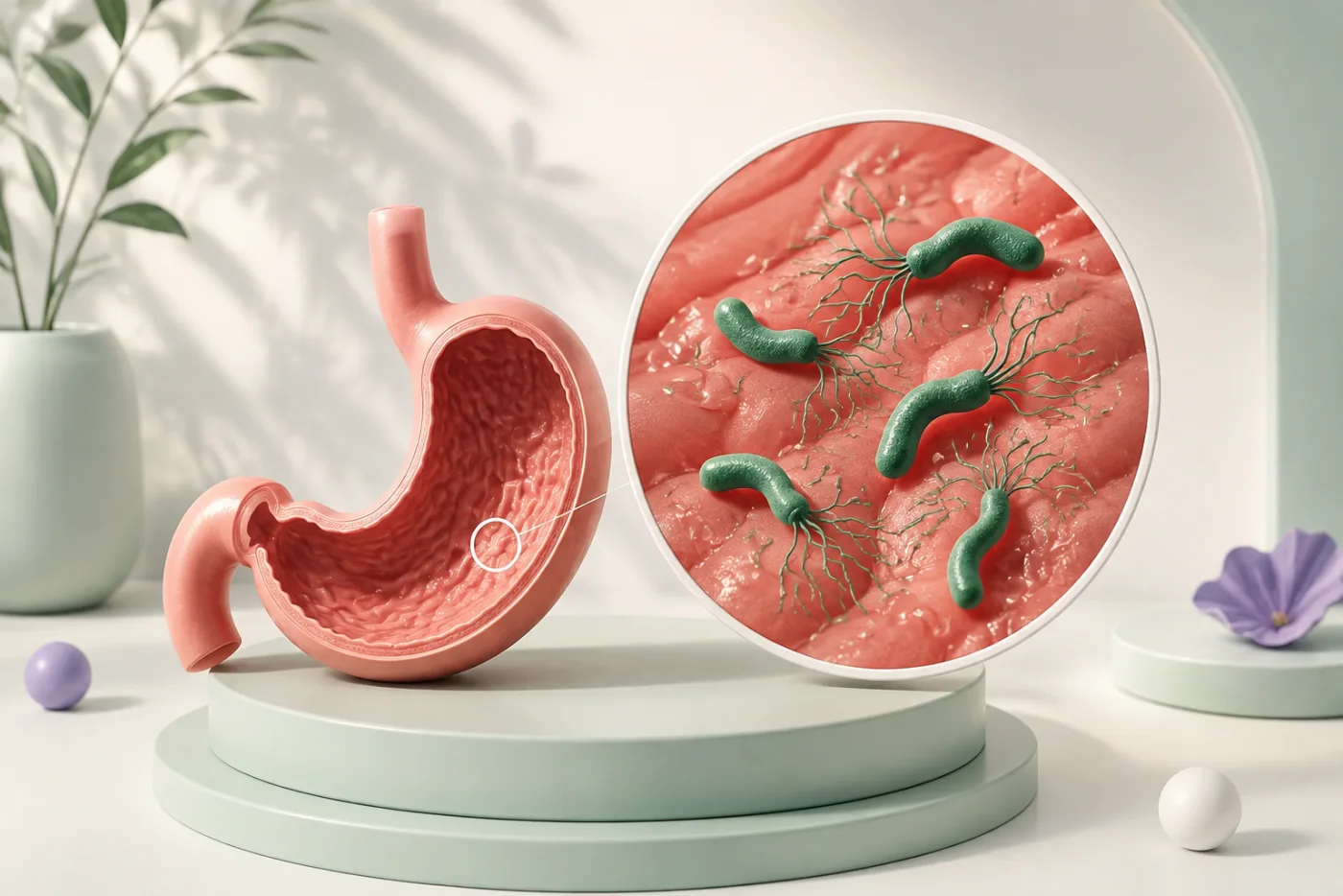
Three steps to follow
Symptoms alone do not identify H. pylori. Testing and follow-up matter.
- TestBreath or stool test→
- TreatComplete the prescribed course→
- Confirm cureA follow-up test
Arrange a 2-week PPI/PCAB pause with your clinician before testing.
H. pylori may cause no symptoms, but can cause ulcers and increase future stomach cancer risk. A positive result does not mean you have cancer.
Where would you like to start?
Understanding H. pylori
Symptoms alone do not identify H. pylori. Testing and follow-up matter.
Care during H. pylori treatment
The confirmation test needs the right timing. Your clinician plans the medicine pauses.
Confirming cure and seeking help
Watch for bleeding, severe pain or a serious medicine allergy.
You feel better after H. pylori treatment. Do you still need a test?
Choose an answer to see the explanation.
Let's make it clearer.
Do I still need a test if I feel well?
Yes. Symptoms may improve before the infection is cleared. Confirm eradication after treatment using the timing and preparation agreed with your clinician.
Does a positive result mean stomach cancer?
No. It means the infection was detected. H. pylori can increase future risk, which is one reason to treat it and confirm eradication.
Sources & content information
Source check: 6 September 2026. General patient education for clinician review. Illustrations are conceptual and are not diagnostic images.
- ACG 2024: Antibiotic, bismuth and PPI test intervals
- ACG 2024: H. pylori guideline and test of cure
- NIDDK: H. pylori gastritis and complications
- NIDDK: Gastritis symptoms and causes
- NIDDK: Gastritis diagnosis
- NIDDK: Gastritis treatment
- NIDDK: Gastritis eating and nutrition
- Royal Berkshire NHS: Breath test preparation
- NHS: Antibiotic side effects and severe allergy
- NIDDK: Ulcer symptoms and urgent complications
- NHS: Ulcer complications