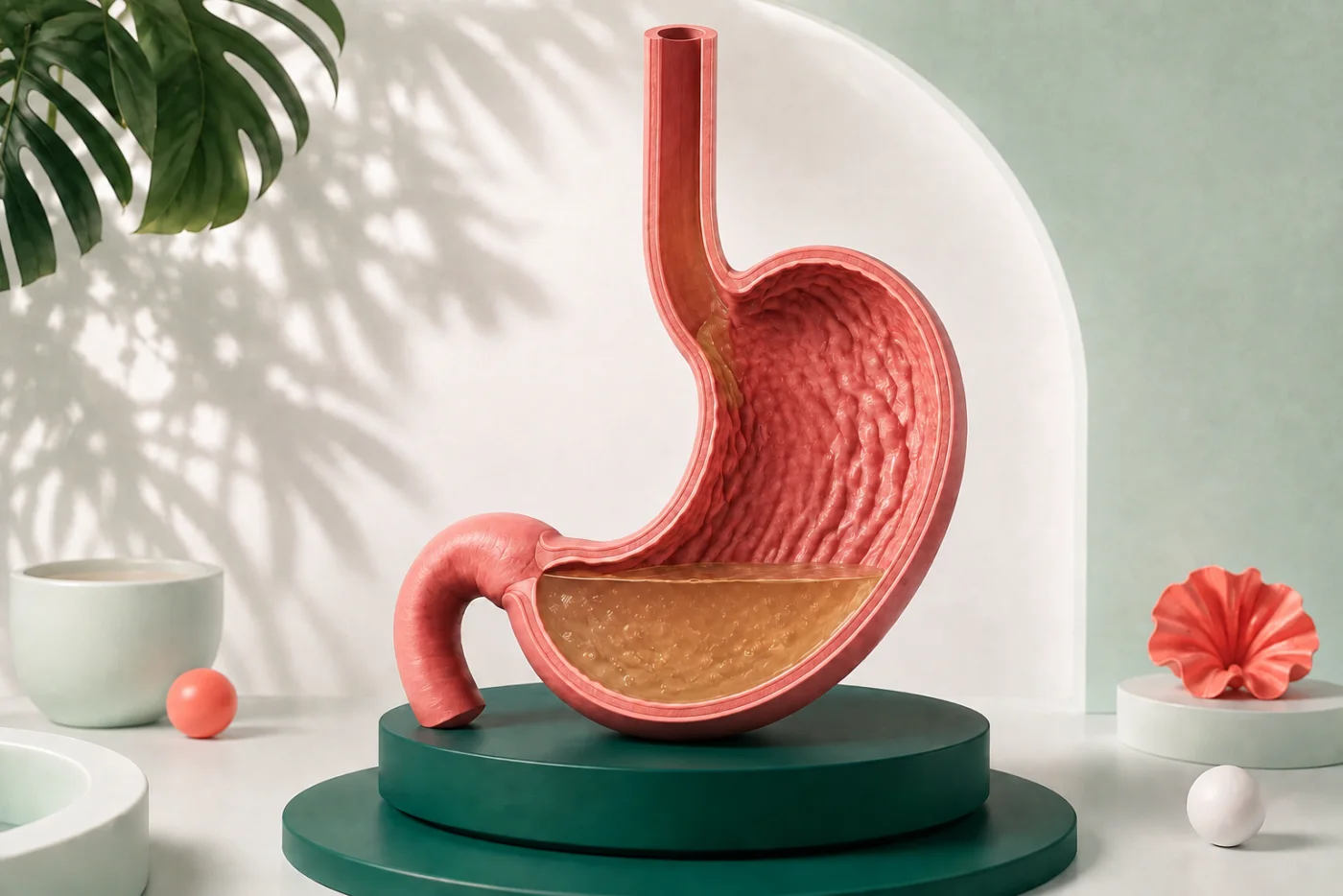
From occasional reflux to GERD
Reflux occurs when stomach contents move upward. It becomes GERD when symptoms are repeatedly troublesome or cause complications.
More details
Occasional reflux is common. Gastro-oesophageal reflux disease, or GERD, describes reflux that repeatedly causes troublesome symptoms or complications. It can happen when the valve at the lower end of the oesophagus relaxes at the wrong time or does not close effectively.
Common and less typical symptoms
Heartburn and sour regurgitation are common. Cough or hoarseness alone cannot establish the diagnosis.
More details
Heartburn is a burning feeling behind the breastbone. Regurgitation brings sour liquid or food back toward the mouth. Symptoms may worsen after meals or when lying down. Persistent cough or hoarseness can have several causes, so these symptoms alone do not establish a reflux diagnosis.
When tests are useful
Persistent symptoms or warning signs may need endoscopy or reflux monitoring to clarify the cause.
More details
Your clinician can often begin assessment from symptoms and medical history. Endoscopy may be needed for warning signs, suspected complications or symptoms that persist despite treatment. Reflux monitoring can measure acid exposure and help clarify whether ongoing symptoms are actually related to reflux.